
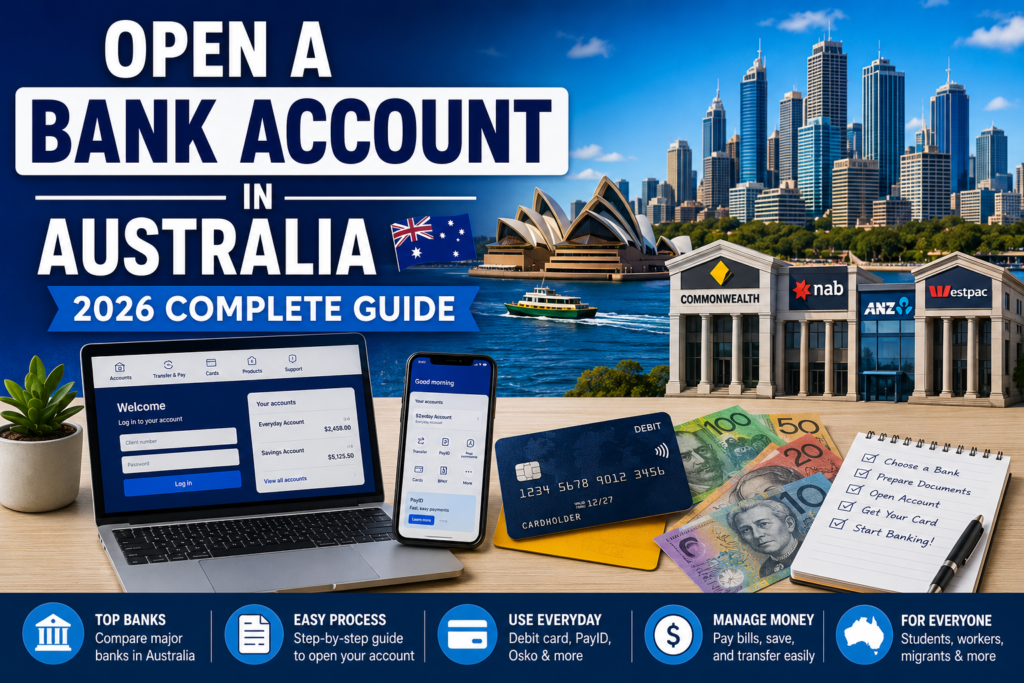
Introduction
Moving to Australia is exciting, but one of the first things you should do after arriving is open an Australian bank account.
Having a local bank account makes it easier to receive your salary, pay rent, shop online, and manage your daily expenses. Whether you’re visiting on a Working Holiday Visa, Student Visa, Temporary Skill Shortage Visa (Subclass 482), or Permanent Residency, opening a bank account is a simple process when you know what documents you need.
In this guide, you’ll learn how to open a bank account in Australia in 2026, the best banks to choose, required documents, fees, and helpful tips for new arrivals.
Why Do You Need an Australian Bank Account?
Opening an Australian bank account offers several advantages.
- Receive your salary directly from your employer
- Pay rent and utility bills
- Use debit cards for everyday purchases
- Transfer money easily using PayID and Osko
- Avoid expensive international banking fees
Without an Australian account, managing your finances can become much more difficult.
Best Banks in Australia
Here are some of the most popular banks for international workers and students.
Commonwealth Bank (CommBank)
Pros
- Largest branch network
- Excellent mobile banking app
- Easy account setup for newcomers
Cons
- Monthly account fees may apply
ANZ
Pros
- Good international banking services
- Large ATM network
- Easy overseas transfers
Cons
- Fewer branches than CommBank
NAB (National Australia Bank)
Pros
- No monthly fee on many everyday accounts
- Popular among students
- Good customer support
Westpac
Pros
- Strong online banking
- Many branches nationwide
- Good savings account options
Documents You’ll Need
Most banks require:
- Passport
- Australian Visa
- Australian address (if available)
- Australian phone number
- Tax File Number (optional but recommended)
Some banks allow you to open an account before arriving in Australia.
How to Open a Bank Account
Step 1
Choose your preferred bank.
Step 2
Apply online or visit a local branch.
Step 3
Verify your identity using your passport.
Step 4
Receive your debit card.
Step 5
Activate online banking and mobile banking.
Bank Fees
Most Australian banks charge little or no monthly fees for basic everyday accounts.
Typical fees include:
- Monthly account fee: $0–$5
- International transfer fees
- ATM fees (depending on the bank)
- Foreign transaction fees
Always compare fees before choosing a bank.
Everyday Banking Features
Australian banks offer modern banking services such as:
- PayID
- Osko instant transfers
- Apple Pay
- Google Pay
- Samsung Pay
- Mobile banking apps
- BPAY bill payments
These features make everyday banking simple and convenient.
Tips for New Arrivals
- Open your account as soon as possible after arriving.
- Download the bank’s mobile app immediately.
- Set up PayID for faster payments.
- Link your account to your employer for salary payments.
- Keep your debit card secure and enable transaction notifications.
Frequently Asked Questions
Can tourists open a bank account?
Some banks allow visitors to open an account before arrival, but full identification is required after entering Australia.
Which bank is best?
Commonwealth Bank is popular for newcomers, but NAB, ANZ, and Westpac are also excellent choices.
Can I open an account online?
Yes. Most major Australian banks allow online applications.
Do I need a TFN?
No, but providing your TFN helps avoid higher withholding tax on interest earned.
Final Thoughts
Opening an Australian bank account is one of the first and most important steps after moving to Australia. Choosing the right bank can save money, simplify everyday life, and make receiving your salary much easier.
Compare the major banks, prepare your documents, and open your account as early as possible to enjoy a smooth transition to life in Australia.