
Introduction
Australia offers an excellent quality of life, but understanding the cost of living is essential before moving. Whether you’re coming as a student, working holiday maker, skilled migrant, or permanent resident, knowing your monthly expenses will help you budget and avoid financial stress.
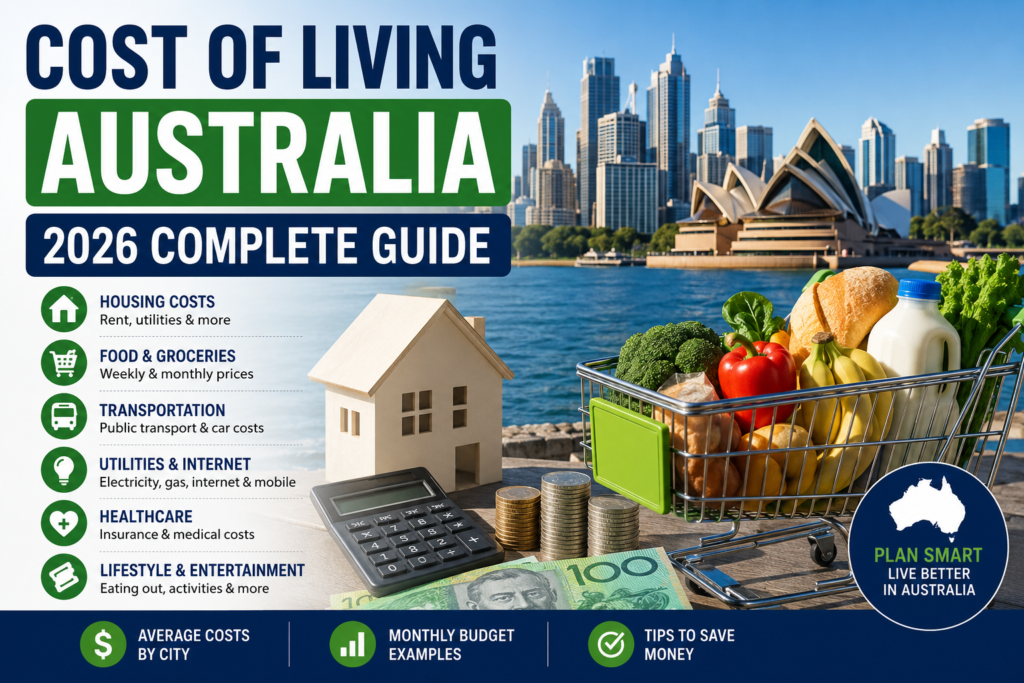
In this guide, you’ll learn the average costs of rent, food, transportation, utilities, healthcare, internet, and entertainment in Australia in 2026.
Let’s break down exactly how much money you really need.
What Is the Average Cost of Living in Australia?
The average monthly living expenses vary depending on your lifestyle and the city you choose.
| Person | Monthly Cost (AUD) |
|---|---|
| Single Person | $2,500 – $4,000 |
| Couple | $4,000 – $6,500 |
| Family of Four | $6,500 – $9,000 |
Sydney and Melbourne are generally the most expensive cities, while Adelaide, Perth, Hobart, and regional areas are more affordable.
Accommodation Costs
Housing is usually the biggest expense.
Average Weekly Rent
Sydney
- Shared Room: $250–450
- One-bedroom Apartment: $650–900
Melbourne
- Shared Room: $220–400
- One-bedroom Apartment: $550–800
Brisbane
- Shared Room: $200–350
- One-bedroom Apartment: $500–700
Regional Australia
- Shared Room: $120–250
- One-bedroom Apartment: $300–500
Living with housemates is one of the easiest ways to reduce costs.
Grocery Costs
Average weekly grocery spending:
- Milk – $2.50
- Bread – $3.50
- Eggs – $6
- Chicken Breast (1kg) – $14
- Rice (5kg) – $16
- Apples (1kg) – $5
- Bananas (1kg) – $4
A single person usually spends around:
$80–150 per week
Shopping at ALDI often provides the best value.
Transportation Costs
Public Transport
- Sydney (Opal): $50–70/week
- Melbourne (Myki): $45–65/week
- Brisbane (Go Card): $40–60/week
Owning a Car
Fuel: $1.70–2.20/L
Typical monthly expenses:
- Fuel
- Registration
- Insurance
- Maintenance
Estimated monthly total:
$300–700
Utility Bills
Average monthly bills:
Electricity
$80–180
Gas
$30–80
Water
Usually included in rent
Internet
$70–100
Mobile Plan
$25–60
Eating Out
Average prices
Coffee
$5–7
Fast Food Meal
$15–20
Restaurant Meal
$25–40
Nice Dinner
$50–100+
Cooking at home can save hundreds of dollars each month.
Healthcare Costs
Australia has one of the world’s best healthcare systems.
Depending on your visa, you may need Overseas Student Health Cover (OSHC) or Overseas Visitor Health Cover (OVHC).
Permanent residents and citizens may qualify for Medicare.
Tips to Save Money
✔ Live in shared accommodation
✔ Shop at ALDI
✔ Buy second-hand furniture
✔ Use public transport
✔ Cook at home
✔ Compare electricity and internet providers
✔ Take advantage of student discounts if eligible
Is Australia Expensive?
Australia isn’t the cheapest country, but salaries are also among the highest in the world.
Many workers can comfortably cover their expenses while still saving money, especially if they manage their budget carefully.
Understanding the cost of living before you arrive will help you make smarter financial decisions and enjoy your experience in Australia.
Conclusion
Although Australia has a relatively high cost of living, it also offers excellent wages, a high standard of living, and strong worker protections. With good planning and smart budgeting, most newcomers find that living in Australia is both manageable and rewarding.
📌 SEO Meta Description
Discover the real cost of living in Australia in 2026. Learn average rent, food, transport, utilities, healthcare, and monthly expenses before moving.