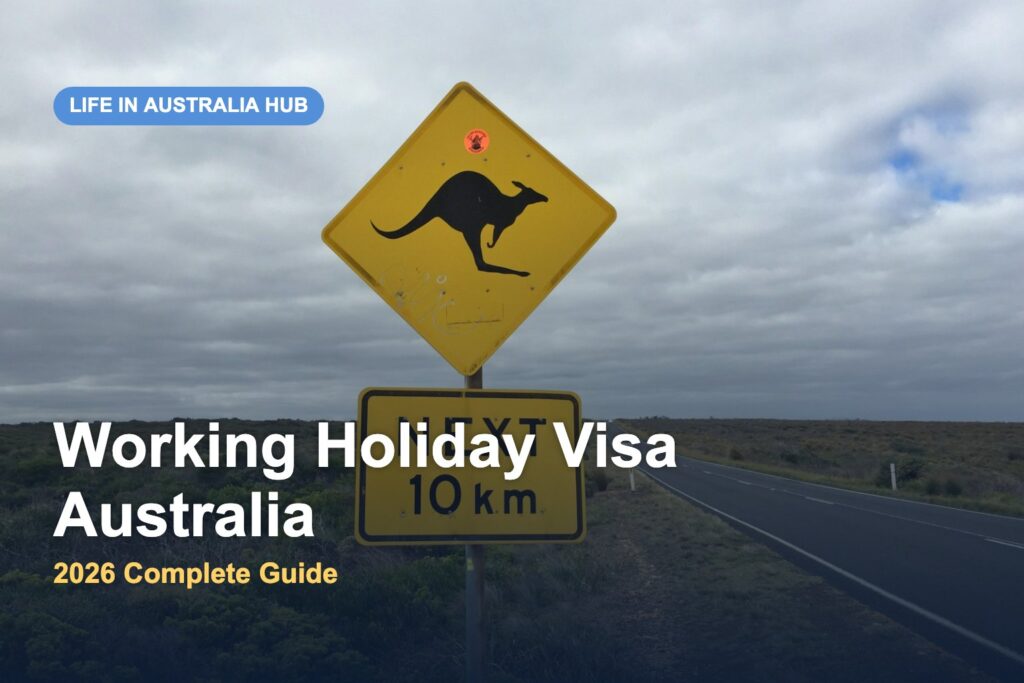
Every year, thousands of young people come to Australia on a Working Holiday visa. It lets you travel around the country for a year, work to pay for your trip, and in many cases stay for a second or even third year.
This guide explains the two types of Working Holiday visas, who can apply, how much it costs, the work rules you need to know, and how to extend your stay. All details below were checked against the Department of Home Affairs website at the time of writing, but visa rules change, so always confirm the latest information before you apply.
Quick Summary
| Question | Answer |
|---|---|
| Visa types | Working Holiday (subclass 417) and Work and Holiday (subclass 462) |
| Age | 18 to 30 (up to 35 for some 417 countries) |
| Length of stay | 12 months per visa |
| Visa cost | AUD 840 for a first visa |
| Processing time | Around three months on average |
| Work limit | Generally up to 6 months with one employer |
| Study limit | Up to 4 months per visa |
| Extend your stay | Do specified work for a second and third visa |
What Is the Working Holiday Maker Program?
Australia’s Working Holiday Maker (WHM) program has been running since 1975. It is a reciprocal program, which means Australia has agreements with more than 40 partner countries and jurisdictions. Young people from those countries can holiday in Australia and work short-term jobs to fund their travels.
The main purpose of the visa is a holiday. Work and study are allowed, but they are meant to support your trip.
417 vs 462: Which Visa Do You Need?
Which visa you apply for depends on the passport you hold. You cannot choose.
Working Holiday visa (subclass 417)
This visa is for passport holders from countries such as the United Kingdom, Ireland, Canada, France, Germany, Italy, Japan, South Korea, Taiwan and several others. The age limit is 18 to 30, or up to 35 for passport holders from some countries.
Work and Holiday visa (subclass 462)
This visa is for passport holders from countries such as the United States, China, India, Vietnam, Indonesia, Thailand, Spain and others. The age limit is 18 to 30. Some 462 countries have extra requirements, such as a letter of support from your government, minimum education or English language requirements, and yearly caps on the number of visas.
If you hold a passport from China, India or Vietnam, you must first enter a pre-application ballot and be randomly selected before you can apply for your first 462 visa.
Check the full list of eligible countries and your country’s requirements on the Home Affairs website.
Who Can Apply?
For your first Working Holiday visa, you must generally:
- Hold a passport from an eligible country
- Be within the age limit when you apply
- Apply online from outside Australia
- Not bring dependent children with you
- Apply on your own (you cannot include family members)
- Not have entered Australia on a 417 or 462 visa before
- Meet health and character requirements
- Have enough money to support yourself at the start of your stay, plus money for a return or onward ticket
How Much Does It Cost and How Long Does It Take?
A first Working Holiday or Work and Holiday visa costs AUD 840. Home Affairs says the average processing time is expected to be around three months.
Do not book flights or make firm plans until your visa is granted. Use the Visa Pricing Estimator on the Home Affairs website for your exact cost.
How to Apply (Step by Step)
- Check that your passport is from an eligible country and that you meet the age limit
- If you hold a 462 passport, check your country’s extra requirements and whether a ballot applies
- Create an ImmiAccount on the Home Affairs website
- Complete the online application and upload any documents requested
- Pay the visa fee
- Complete health checks or provide extra information if asked
- Wait for the outcome before booking travel
Applying is simple to do yourself. If you choose to get help, only use a registered migration agent.
What You Can Do on a Working Holiday Visa
With this visa you can:
- Stay in Australia for 12 months from the date you first enter
- Work in almost any job, in any industry
- Study or train for up to 4 months
- Leave and re-enter Australia as many times as you like while your visa is valid
- Do specified work to become eligible for a second visa
Work Rules You Must Follow
The 6-month rule
Under visa condition 8547, you can generally work for up to 6 months with one employer. Some types of work and situations have exemptions, and you can ask for permission to work longer for the same employer. You must ask before your 6 months are up.
The 4-month study rule
Under condition 8548, you can study or train for up to 4 months on each visa. Online courses with an overseas provider do not count towards this limit.
Your rights at work
Working holiday makers have the same workplace rights as every other worker in Australia. This includes minimum pay rates, safe working conditions and protection from unfair treatment. Casual workers usually receive a higher hourly rate (called casual loading) instead of paid leave. You can check pay rates and your rights on the Fair Work Ombudsman website.
Best Jobs for Working Holiday Makers
Popular jobs include:
- Hospitality: cafés, restaurants, bars and hotels
- Farm and agriculture work: fruit picking, packing sheds and general farm work
- Construction and labouring: you will usually need a White Card safety course
- Retail: supermarkets and shops, especially before Christmas
- Tourism: tour companies, resorts and hostels
- Cleaning and housekeeping
- Office and admin work if you have the skills and experience
Our guides on how to find a job in Australia and the best job websites in Australia explain where to look and how to apply.
How to Stay for a Second or Third Year
You can apply for a second Working Holiday visa if you complete 3 months (88 days) of specified work during your first visa. For a third visa, you need to complete 6 months of specified work during your second visa.
What counts as specified work?
Specified work depends on your visa and must be done in eligible regional postcodes. It commonly includes:
- Plant and animal cultivation, such as fruit picking, harvesting and farm work
- Fishing and pearling
- Tree farming and felling
- Mining
- Construction (in eligible areas)
- Some tourism and hospitality work in northern or remote Australia
- Bushfire and natural disaster recovery work
Rules are different for 417 and 462 visas, so check the specified work lists on the Home Affairs website before you start a job. Keep payslips and records of every day you work, because you will need to prove it.
UK passport holders
Since 1 July 2024, UK passport holders can get a second or third Working Holiday visa without doing any specified work, as long as they apply using their UK passport.
Tax and Banking for Working Holiday Makers
Before you start work, set up the basics:
- Apply for a Tax File Number (TFN) as soon as you arrive. Without it, you will pay much more tax
- Open an Australian bank account so your employer can pay you
- Know that working holiday makers have their own tax rates. For the 2025–26 year, the first $45,000 of taxable income is taxed at 15%
- Your employer must pay superannuation for you. When you leave Australia permanently, you can apply to claim it back, but tax applies to that payment
Budget for Your Working Holiday
Australia can be expensive, especially in big cities. Rent in a shared house or hostel will likely be your biggest cost, followed by food and transport. Bring enough money to cover your first few weeks while you look for work.
Our cost of living in Australia guide breaks down typical expenses so you can plan ahead.
Common Mistakes to Avoid
- Booking flights before your visa is granted
- Not keeping records of specified work, such as payslips and hours worked
- Working for an employer who pays cash with no payslips, which can make your specified work impossible to prove
- Staying more than 6 months with one employer without permission
- Paying for “guaranteed” farm jobs. Be careful of scams and always research employers first
Frequently Asked Questions
Can I apply for a Working Holiday visa from inside Australia?
For your first visa, you must apply from outside Australia. Second and third visas have different rules, so check the Home Affairs website.
Can I bring my partner?
Your partner cannot be included in your application. If they are eligible, they need to apply for their own visa.
How many hours can I work?
There is no weekly hour limit, but you can generally only work 6 months with one employer.
Do I need health insurance?
Working holiday makers usually cannot use Medicare unless they are from a country with a reciprocal health agreement with Australia. Travel or health insurance is strongly recommended.
Can I get a second visa if I am from the UK?
Yes. UK passport holders who apply on or after 1 July 2024 do not need to complete specified work for a second or third visa.
Final Thoughts
A Working Holiday visa is one of the best ways to experience Australia. You can travel, meet people from around the world, earn money and even stay for up to three years.
Plan ahead, follow the work rules, keep good records, and always check the latest information from Home Affairs before making decisions.
Related Guides
- How to Find a Job in Australia
- How to Get a Tax File Number (TFN)
- How to Open a Bank Account in Australia
- Cost of Living in Australia
Official Resources
- Working Holiday visa (subclass 417) – Department of Home Affairs
- Work and Holiday visa (subclass 462) – Department of Home Affairs
- Fair Work Ombudsman – pay rates and workplace rights
📋 Free: Your First 2 Weeks in Australia Checklist
New to Australia? Get our printable checklist for your SIM, bank account, TFN, myGov, super, renting and first payslip, plus alerts when visa, wage or tax rules change. No spam, unsubscribe any time.