The Great Ocean Road is one of the most famous coastal drives in the world. It winds along Victoria’s south-west coast past surf beaches, rainforest, waterfalls, seaside towns and the dramatic limestone stacks of the Twelve Apostles.
This guide explains where the Great Ocean Road starts and ends, the best stops along the way, how many days you need, a suggested itinerary, the best time to go, and practical tips for driving it safely.
Quick Summary
| Question | Answer |
|---|---|
| Where is it? | South-west Victoria, starting about 1.5 hours from Melbourne |
| Length | About 240 km, from Torquay to near Warrnambool |
| Most famous sight | The Twelve Apostles |
| Recommended time | 2 to 3 days (a day trip is possible but rushed) |
| Best time to visit | Late spring to early autumn (roughly October to April) |
| Getting around | Self-drive is best; tours run from Melbourne |
A Short History
The Great Ocean Road was built between 1919 and 1932 by returned soldiers from World War I. It was dedicated to those who died in the war and is often described as the world’s largest war memorial. Today it is protected as an Australian National Heritage-listed landscape.
The Best Stops on the Great Ocean Road
Torquay and Bells Beach
Torquay is the official start of the road and the home of Australian surf culture. Nearby Bells Beach is famous for its world-class waves and long-running surf competition. Stop for a coffee and a walk along the beach before you head west.
Anglesea and Aireys Inlet
Look for kangaroos on the golf course at Anglesea, then visit Split Point Lighthouse at Aireys Inlet for big views along the coast. The Memorial Arch at Eastern View is a popular photo stop that marks the road’s history.
Lorne
Lorne is a lively seaside town with cafés, a long beach and easy access to the rainforest. Drive inland to Erskine Falls, a beautiful waterfall surrounded by ferns.
Kennett River
This small spot is one of the best places in Australia to see wild koalas in the trees along Grey River Road. Look up carefully and you may spot several. Please do not feed the wildlife.
Apollo Bay
Apollo Bay is a relaxed fishing town and a good place to stay overnight. It has a great beach, seafood and a harbour, and it is the gateway to the Great Otway National Park.
Great Otway National Park and Cape Otway
Walk through tall forest and ferns, see waterfalls such as Hopetoun Falls and Triplet Falls, and visit the historic Cape Otway Lightstation, one of the oldest working lighthouses on mainland Australia.
The Twelve Apostles
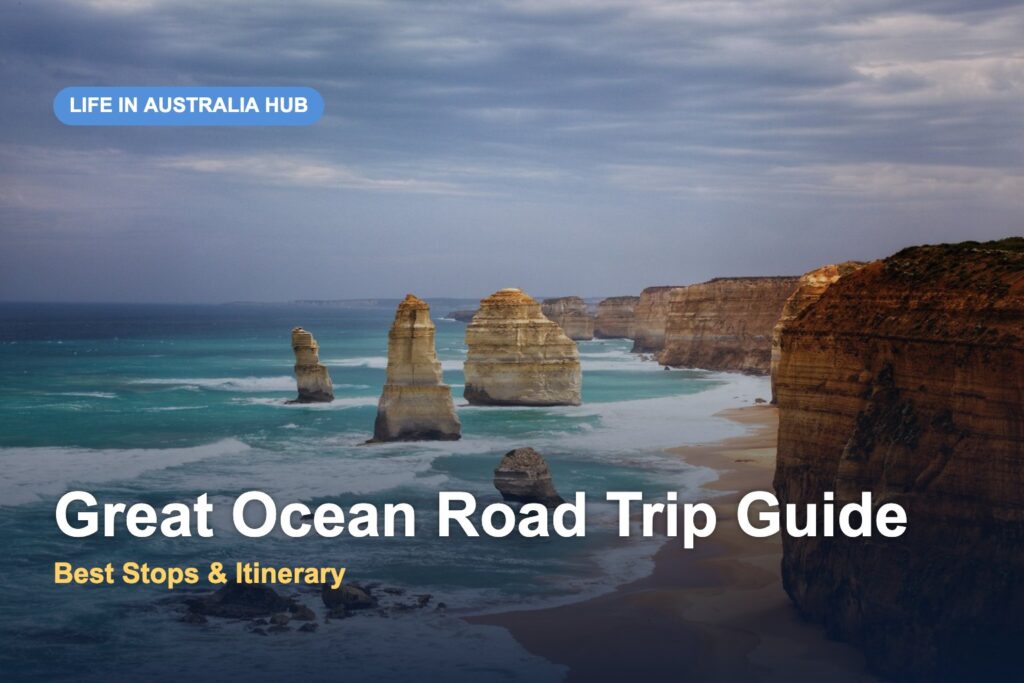
The highlight for most visitors. These huge limestone stacks rise out of the Southern Ocean near Port Campbell. Despite the name, there are fewer than twelve today, as the sea slowly erodes them. Sunrise and sunset are the most beautiful times to visit.
Gibson Steps
Just before the Twelve Apostles, Gibson Steps lead down to the beach so you can see the stacks from sea level. Check conditions first, as access can close during rough weather or high tides.
Loch Ard Gorge
A stunning gorge with a small beach between towering cliffs. It is named after a famous 1878 shipwreck and has walking tracks and lookouts that tell the story.
London Bridge, The Grotto and the Bay of Islands
Further west, these rock formations are often quieter than the Twelve Apostles but just as impressive. London Bridge famously lost its connection to the mainland in 1990, leaving an arch standing in the sea.
Port Fairy and Warrnambool
At the western end, Warrnambool is known for whale watching in winter, while nearby Port Fairy is a charming historic fishing village.
How Many Days Do You Need?
| Time | What you can do |
|---|---|
| 1 day | Drive to the Twelve Apostles and back from Melbourne. Long and tiring, with little time at stops |
| 2 days | Stay overnight in Lorne or Apollo Bay. Enough for the main highlights |
| 3 days or more | Explore waterfalls, walks, the Otways and the western section at a relaxed pace |
If you can, allow at least two days. The drive is about the journey, not just the destination.
Suggested 3-Day Itinerary
Day 1: Melbourne to Lorne
Drive from Melbourne to Torquay, visit Bells Beach, stop at Anglesea and Split Point Lighthouse, and finish in Lorne. Visit Erskine Falls in the afternoon.
Day 2: Lorne to Apollo Bay and the Otways
Drive the most scenic coastal section, stop to look for koalas at Kennett River, have lunch in Apollo Bay, then explore Great Otway National Park and Cape Otway.
Day 3: The Twelve Apostles and back
Head west to Gibson Steps, the Twelve Apostles, Loch Ard Gorge and London Bridge. Return to Melbourne via the faster inland route.
Best Time to Visit
- Summer (December to February): warm weather and long days, but busy roads and higher prices. Book accommodation early
- Autumn (March to May): mild weather and fewer crowds, a great time to go
- Winter (June to August): cold, windy and wet, but dramatic seas and fewer tourists. Whale watching season near Warrnambool
- Spring (September to November): fresh green landscapes, waterfalls flowing and mild weather
The weather on the coast can change quickly at any time of year, so pack layers and a rain jacket.
Getting There and Getting Around
Self-drive
Driving yourself gives you the most freedom to stop where you like. You can hire a car or campervan in Melbourne. If you are an overseas visitor, check that your licence is valid in Victoria.
Tours
Many day tours run from Melbourne. They are convenient if you do not want to drive, but days are long and stops are short.
Public transport
Regional buses connect some towns, but services are limited. Public transport is not the easiest way to see the road.
Driving Tips and Safety
- Australians drive on the left side of the road
- The road is narrow and winding in places. Take it slowly and use the marked pull-over areas to stop and to let faster cars pass
- Watch for wildlife, especially at dawn and dusk
- Do not stop on the road for photos. Use the designated lookouts and car parks
- Fill up with fuel in larger towns
- Check road conditions before you travel, as landslides or storms can close sections
Where to Stay
Popular bases include Lorne, Apollo Bay and Port Campbell. Options range from campgrounds and caravan parks to motels, holiday rentals and boutique stays. Book ahead in summer and on long weekends.
Budget Tips
- Travel outside school holidays and long weekends for better prices
- Share a hire car with friends to split fuel costs
- Bring a picnic lunch for lookouts and parks
- Many of the best sights, beaches and walks are free
Our guide to the cost of living in Australia can help you budget for travel too.
Wildlife to Look Out For
The Great Ocean Road is one of the best places in Victoria to see Australian wildlife in the wild:
- Koalas in the trees around Kennett River and Cape Otway
- Kangaroos grazing at Anglesea and in open paddocks
- Birdlife, including colourful parrots and seabirds along the cliffs
- Southern right and humpback whales passing the coast in the cooler months, especially near Warrnambool
- Glow worms on some guided night walks in the Otways
Keep your distance, never feed wild animals and drive carefully, especially at dawn and dusk.
Short Walks Worth Doing
You do not need to be a serious hiker to enjoy the Great Ocean Road. Some easy and rewarding walks include the short Twelve Apostles boardwalk, the Loch Ard Gorge lookout tracks, the walk down to Erskine Falls, and the Maits Rest rainforest walk in the Otways. For experienced walkers, the multi-day Great Ocean Walk follows the coast between Apollo Bay and the Twelve Apostles and needs planning and bookings.
Frequently Asked Questions
How long does it take to drive the Great Ocean Road?
Driving without stops takes several hours, but most visitors take 2 to 3 days to enjoy the stops properly.
Can you do the Great Ocean Road in one day?
Yes, but it is a long day. You will spend most of it driving and have limited time at each stop.
Where does the Great Ocean Road start?
It officially starts in Torquay, about 1.5 hours south-west of Melbourne, and runs to near Warrnambool.
How many of the Twelve Apostles are left?
Fewer than twelve. The name was always more of a nickname, and erosion continues to change the coastline.
Where can I see koalas on the Great Ocean Road?
Kennett River, especially along Grey River Road, is one of the best spots to see wild koalas.
Final Thoughts
The Great Ocean Road is a highlight of any trip to Australia. Give yourself at least two days, start early, take your time on the winding road and stop often. The views, beaches and wildlife will make it one of your favourite Australian memories.
Planning more travel? See our list of the best places to visit in Australia and our Tasmania travel guide.
Related Guides
- Best Places to Visit in Australia
- Tasmania Travel Guide
- Best Time to Visit Australia
- Best Cities to Live in Australia
Official Resources
📋 Free: Your First 2 Weeks in Australia Checklist
New to Australia? Get our printable checklist for your SIM, bank account, TFN, myGov, super, renting and first payslip, plus alerts when visa, wage or tax rules change. No spam, unsubscribe any time.