Tasmania is Australia’s island state, and for many travellers it is the most memorable part of the country. In a relatively small area you will find wild mountains, white-sand beaches, ancient forests, historic towns and some of the best food and drink in Australia.
This Tasmania travel guide covers the top places to visit, how to get there and around, how many days you need, a suggested itinerary, the best time to go, and practical tips for exploring the island.
Quick Summary
| Question | Answer |
|---|---|
| Capital city | Hobart |
| How to get there | Fly to Hobart or Launceston, or take the Spirit of Tasmania ferry from Geelong with your car |
| Best way to get around | Self-drive |
| Recommended time | 7 to 10 days for a good loop |
| Best time to visit | Late spring to early autumn (roughly November to April) |
| Top sights | Cradle Mountain, Wineglass Bay, Hobart, Port Arthur, Bay of Fires |
Why Visit Tasmania?
- Around 40% of Tasmania is protected in national parks and reserves, including the Tasmanian Wilderness World Heritage Area
- It has some of the cleanest air in the world
- Distances are shorter than on the mainland, so you can see a lot in a week
- It is famous for fresh produce, seafood, cheese, wine and whisky
- You can see unique wildlife, including wombats, wallabies, echidnas and, if you are lucky, Tasmanian devils in the wild
Top Places to Visit in Tasmania
Hobart
Australia’s second-oldest capital city sits on the River Derwent below kunanyi/Mount Wellington. Visit Salamanca Market on Saturdays, explore the historic waterfront and Battery Point, and drive to the summit of kunanyi for views over the city. Hobart is also home to MONA, a famous museum of art.
Cradle Mountain–Lake St Clair National Park
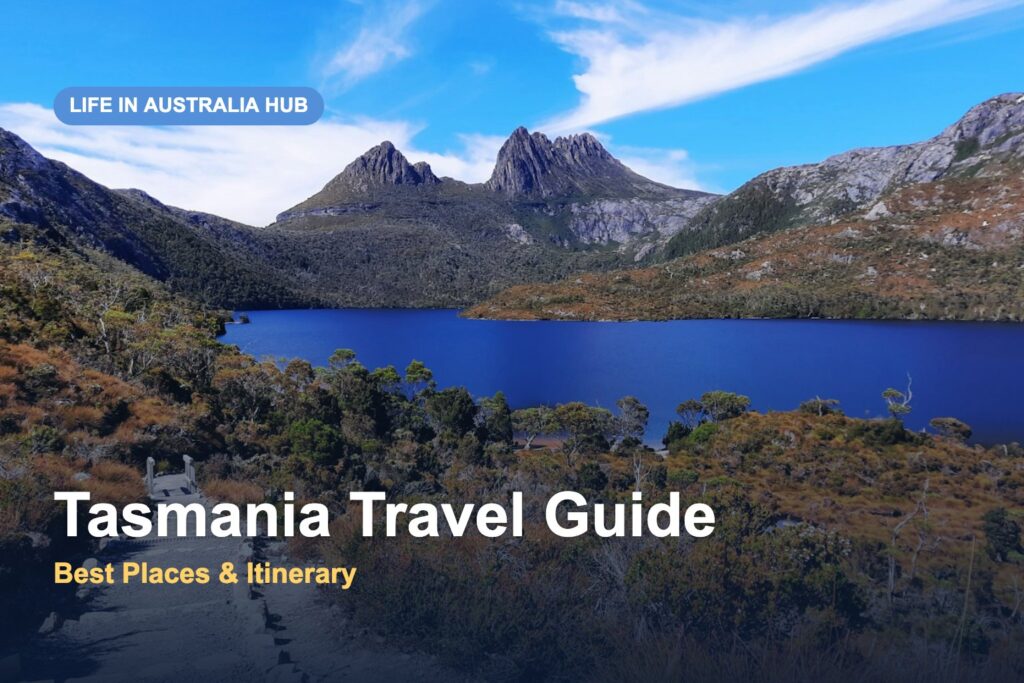
This is Tasmania’s most iconic mountain landscape. Walk around Dove Lake for classic views of Cradle Mountain, look for wombats near the visitor areas, and, if you are experienced and prepared, consider the multi-day Overland Track.
Freycinet National Park and Wineglass Bay
On the east coast, Freycinet is known for pink granite mountains and the perfect curve of Wineglass Bay. Walk to the Wineglass Bay Lookout, or continue down to the beach itself.
Bay of Fires
In the north-east, the Bay of Fires has white sand, clear blue water and granite boulders covered in bright orange lichen. It is beautiful for swimming in summer, walking and photography.
Port Arthur Historic Site
South-east of Hobart, Port Arthur is one of Australia’s most important convict sites and is part of the UNESCO World Heritage-listed Australian Convict Sites. Allow several hours to explore the buildings and gardens.
Bruny Island
A short car ferry ride south of Hobart, Bruny Island offers coastal scenery, wildlife cruises and local produce such as cheese, oysters and berries.
Launceston and Cataract Gorge
Tasmania’s second city is the gateway to the north. Cataract Gorge, just minutes from the centre, has walking tracks, a swimming area and a chairlift. The nearby Tamar Valley is known for its wineries.
The West Coast and Strahan
Strahan is a small harbour town on the wild west coast and the base for cruises on the Gordon River through the World Heritage wilderness.
Mount Field National Park
An easy day trip from Hobart, Mount Field has tall trees and the beautiful Russell Falls, one of Tasmania’s most photographed waterfalls.
How to Get to Tasmania
By plane
Direct flights from mainland capital cities land in Hobart and Launceston. Flying is the fastest option.
By ferry
The Spirit of Tasmania ferry sails between Geelong in Victoria and Devonport in Tasmania. It is a good choice if you want to bring your own car or campervan. Book early in summer.
Getting Around Tasmania
A car is by far the best way to explore. Public transport between towns is limited, and many highlights are in national parks. Hire cars are available at the airports and in the main towns.
You will need a National Parks pass to enter most of Tasmania’s national parks. A holiday pass that covers several weeks is often the best value for travellers.
How Many Days Do You Need?
| Time | Suggested trip |
|---|---|
| 3 to 4 days | Hobart, Port Arthur, Bruny Island or Mount Field |
| 7 days | A loop covering Hobart, Freycinet, Launceston and Cradle Mountain |
| 10 to 14 days | A full loop including the Bay of Fires, the west coast and more walks |
Suggested 7-Day Itinerary
- Day 1: Arrive in Hobart. Explore the waterfront and Battery Point
- Day 2: kunanyi/Mount Wellington in the morning, then Port Arthur
- Day 3: Drive up the east coast to Freycinet National Park
- Day 4: Wineglass Bay Lookout walk, then continue to the Bay of Fires or Launceston
- Day 5: Launceston and Cataract Gorge, then drive to Cradle Mountain
- Day 6: Dove Lake circuit and wildlife spotting at Cradle Mountain
- Day 7: Return to Launceston or Hobart for your flight
Best Time to Visit Tasmania
- Summer (December to February): warmest weather, long days and the best time for beaches and walking. Busy and more expensive
- Autumn (March to May): mild days, autumn colours and fewer crowds
- Winter (June to August): cold, with snow on the mountains. Great for cosy towns, winter festivals and fewer tourists
- Spring (September to November): wildflowers and green landscapes, but weather can be changeable
Tasmania’s weather can change very quickly, even in summer. Always pack warm layers and a waterproof jacket, especially for mountain areas.
Tips for Travelling in Tasmania
- Book accommodation early for summer and school holidays
- Drive carefully at dawn and dusk. Wildlife is very active on Tasmanian roads
- Allow more time than maps suggest. Roads are often winding
- Carry food and water when driving to remote areas, as towns can be far apart
- Respect the environment. Stay on tracks and take your rubbish with you
- Check walking track conditions and register for longer hikes where required
Budget Tips
- Travel in autumn or spring for lower prices
- Consider a campervan, which combines transport and accommodation
- Shop at local markets and farm gates for fresh, affordable food
- Many of the best walks and beaches are free once you have a park pass
Food and Drink in Tasmania
Tasmania is one of Australia’s best food destinations. Try fresh oysters and salmon, scallop pies, local cheese, berries, apples, and award-winning cool-climate wines and whisky. Many farms and producers sell directly at the farm gate or at weekend markets, which is a great way to taste local produce and support small businesses.
Wildlife Spotting
Tasmania is excellent for seeing wildlife. Wombats are common around Cradle Mountain and on Maria Island, while wallabies and pademelons are often seen at dusk. Echidnas, platypus and many bird species live across the island. To see Tasmanian devils, visit one of the wildlife sanctuaries or conservation parks that care for them.
Best Short Walks in Tasmania
- Dove Lake Circuit at Cradle Mountain: about two to three hours around the lake with views of the mountain
- Wineglass Bay Lookout in Freycinet: a steady climb to one of Australia’s most famous views
- Russell Falls in Mount Field National Park: a short, easy walk through tall forest
- Cataract Gorge in Launceston: easy riverside walking tracks close to the city
- The Organ Pipes on kunanyi/Mount Wellington: a moderate walk with dramatic rock formations
Always check track conditions and weather before you go, carry water and warm layers, and tell someone your plans for longer walks.
Frequently Asked Questions
How many days do you need in Tasmania?
About 7 days is enough for a good loop of the main highlights. With 10 to 14 days, you can explore more slowly and visit the west coast.
What is the best month to visit Tasmania?
For warm weather, December to March is best. For fewer crowds and mild weather, March and April are excellent.
Do I need a car in Tasmania?
It is strongly recommended. Public transport between towns is limited, and many attractions are in national parks.
Do I need a pass for Tasmania’s national parks?
Yes. Most national parks require a parks pass, and holiday passes are available for visitors.
Can I see Tasmanian devils in the wild?
It is possible but not common. Wildlife sanctuaries and conservation parks offer a reliable way to see them.
Final Thoughts
Tasmania packs incredible variety into one island: mountains, beaches, history and food. Hire a car, buy a parks pass, pack for all weather and give yourself at least a week. It may become your favourite place in Australia.
Planning more of your trip? See our guides to the best places to visit in Australia and the Great Ocean Road.
Related Guides
- Best Places to Visit in Australia
- Great Ocean Road Trip Guide
- Best Time to Visit Australia
- Best Beaches in Australia
Official Resources
📋 Free: Your First 2 Weeks in Australia Checklist
New to Australia? Get our printable checklist for your SIM, bank account, TFN, myGov, super, renting and first payslip, plus alerts when visa, wage or tax rules change. No spam, unsubscribe any time.